


Tablecloth Condition Rating Scale
The following Tablecloth Condition Rating Scale is intended as a base guideline for buyers and sellers, as well as a "finishing touch" for tablecloth auction descriptions. Many sellers restore or clean all of their tablecloths before sale, but many others do not. The success of restoration (or lack of it) should be included in the individual descriptions of any seller using this scale. The Tablecloth Condition Rating Scale was created as a joint project by members of the Vintage Tablecloth Lovers Club. Member buyers and sellers of vintage tablecloths both gave input to this consensus building project.
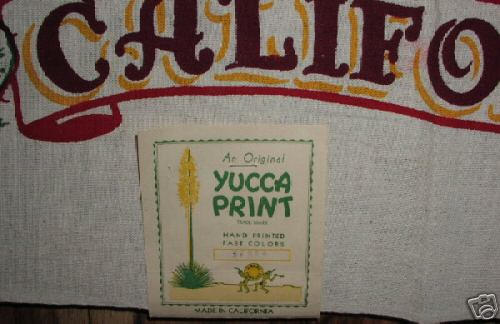
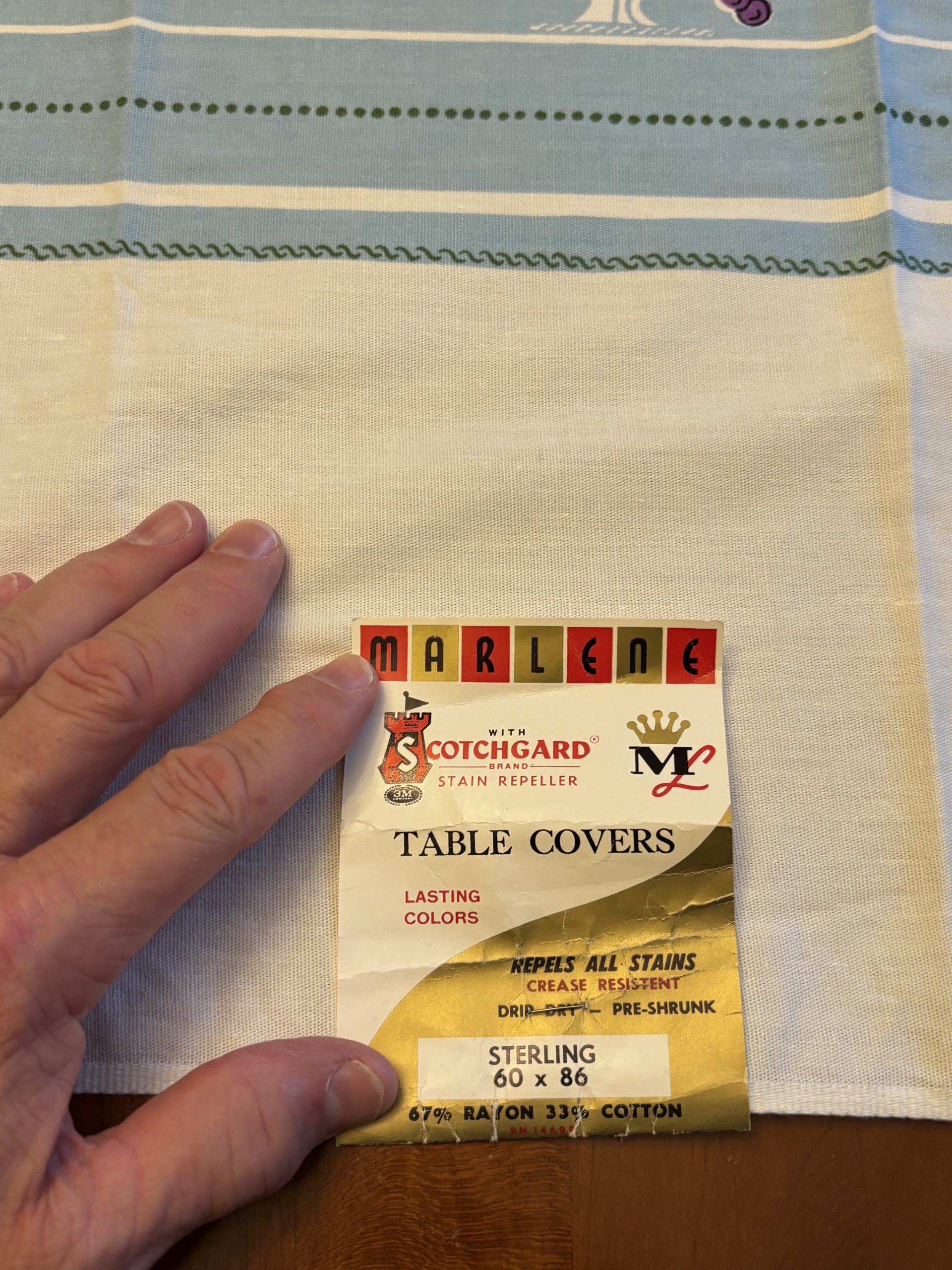
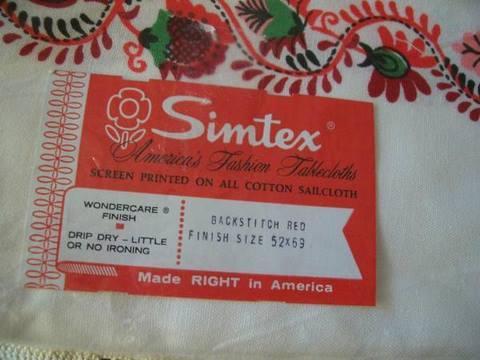
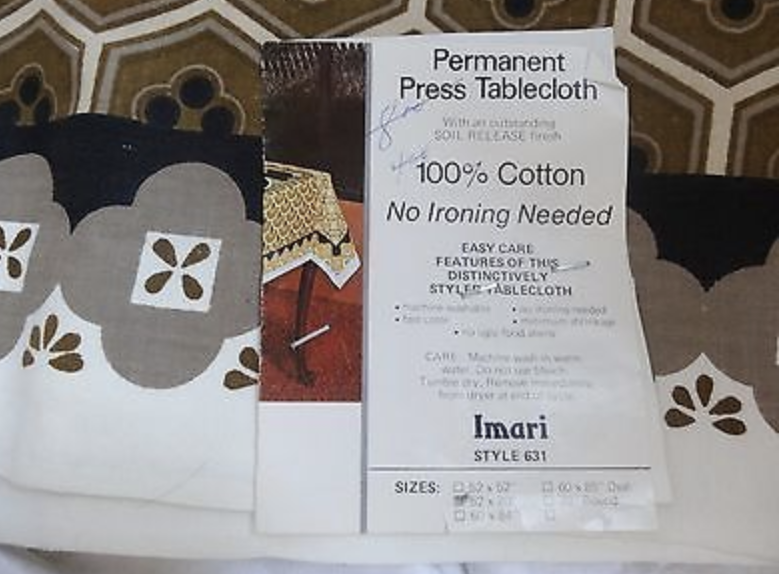
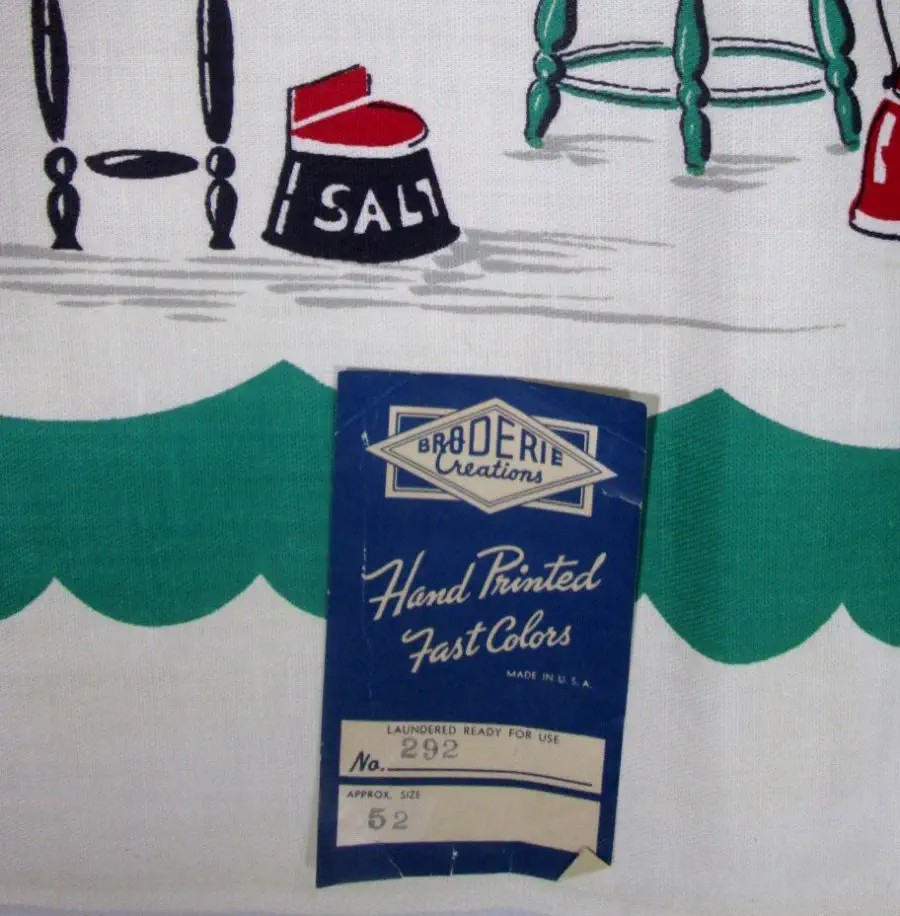
- Mint with Paper Label:
- This category of tablecloth describes a MINT unused cloth with the paper label still attached. Storage stains are acceptable, as are factory defects such as thick threads and inconspicuous dye drips (common for the period). Cloth should be crisp and brightly colored. It may or may not come with a box. This category also describes tablecloths which have had their paper tags removed for professional cleaning and then laminated/bagged and carefully reattached. Storage fading and any other kind of non-storage stains are not acceptable.
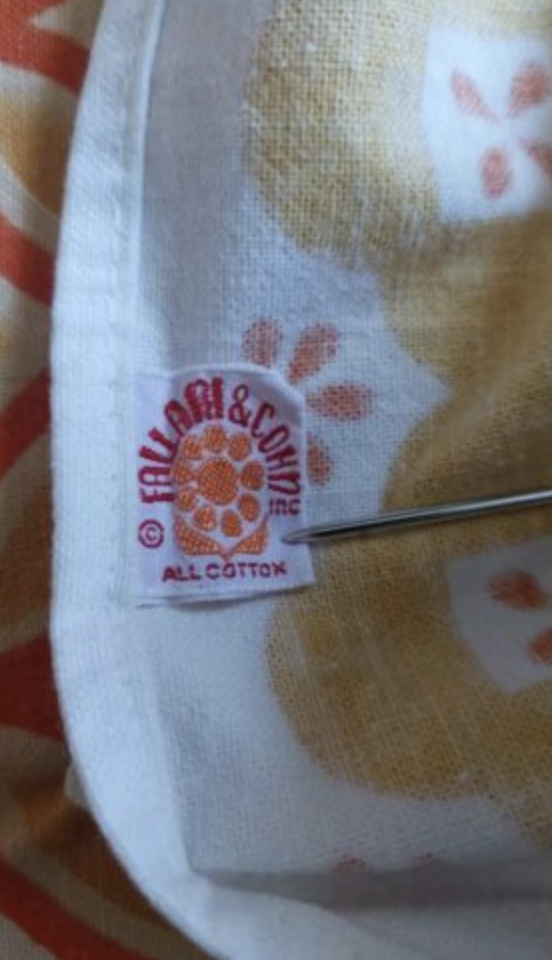
- Mint with Sewn-in Tag:
- This category is exactly like the one above except that at some point, the tablecloth has become separated from its paper tag and only has a sewn-in one. The cloth should still be unused, in pristine condition. Storage stains, thick threads, and inconspicuous dye drips are acceptable. Cloth should be crisp and brightly colored. Cloth may or may not come with a box. Storage fading and any other kind of stain are not acceptable.
- Excellent, Near Mint:
- This category of tablecloth describes those cloths which have been gently used. There may be no tag or box, but the cloth will be in excellent pristine condition with no fading, holes, tears, or stains. The material will still be crisp and the colors vivid. Factory defects may exist, but they will be inconspicuous. Storage stains are acceptable; fading is not.
- Excellent:
- This category describes cloths which have been gently used but which have been stored for some time and may or may not have been restored with modern cleaners. The cloth may have very faint yellowing in places. It may have other mysterious stains, but all will be extremely faint. There should be no fading, holes, tears, or serious stains. The material will still be crisp, and colors will be bright. Factory defects may exist, but they will be still be fairly inconspicuous.
- Very Good:
- This category describes cloths which have been gently used but which may or may not have been restored with modern cleaners. The cloth may have faint yellowing in places and other mysterious small stains (storage, dark streaks, rust pin dots). It may have pinpoint holes or frayed places, or the hem may be unraveling a tiny bit. These faults should be fairly inconspicuous; the stains/holes should not be near or in the center of the cloth where they are highly visible, but on the drop. The cloth should still be crisp. Factory defects may be more visible. There should be no fading.
- Good:
- This category describes cloths which have been moderately used and which may or may not have been restored. The cloth may have some yellowing in places, along with other stains (storage, dark streaks, rust pin dots). It may have pinpoint holes or frayed places, or the hem may be unraveling a tiny bit. There may be other small holes (less than 1/2 of an inch) in various places. The cloth will not be as crisp and there may be some slight even fading overall. Factory defects, if any, may be visible. There may also be inconspicuous darns or iron-on patches.
- Fair:
- This category describes cloths which have been moderately used and which have not seen restoration. The cloth will have visible stains, perhaps including food and grease, and may have other stains from storage or rust. The tablecloth will have holes or frayed places, or the hem will be unraveling. There may be other holes (larger than 1/2 of an inch) in various places. The fabric will not be crisp and will be thin. There may be uneven fading or overall fading, or darns/patches in obvious places•
- Cutter:
- This category describes cloths which have seen damage and can no longer be used for their original intention. One side of an otherwise pristine tablecloth, for instance, could have serious staining, tears, or holes, leaving the other side available for other uses. If a cloth has fading, this should be noted.
- Poor:
- This category describes cloths which have been heavily used and which have not seen restoration. The cloth will have visible stains, including perhaps food, grease, or paint, and may have other stains from storage, rust, or other unknown causes. The tablecloth will have many holes, tears, and frayed places and the hem may be unraveling. The fabric will, in many cases, not be crisp and will be thin, yellowed, and dirty. There may be uneven fading or overall fading, or darns/patches in obvious places.
*Storage stains are the result of fabric coming into contact with wood acid or long-term storage with starch or detergent residue leaving brownish streaks or blotches, often (but not always) in the fold areas. Restoration refers to methods above and beyond simple washing, and should only be attempted by an educated seller or buyer as vintage tablecloths can easily be ruined. Restoration includes the use of modern products combined with prolonged soaking, but it may also include minor sewing repairs and household stain removal methods.